

Tech Expert Q&A with Alexander Kanaris
Interview by Dairy Processing Magazine.
Alexander Kanaris is an electrical engineer, specializing in electric motor designs. As the founder and president of Ontario-based Van der Graaf (VDG), he holds 26 patents in electrical and mechanical conveyor drive designs, including VDG’s flagship product, the VDG Drum Motor.
For more than 40 years, Kanaris has provided customized drive solutions to solve industry challenges faced by conveyor equipment manufacturers, and processors in the food and material handling industries.
Established in 1985 in a 3,500-square-foot facility, VDG has grown over the years and currently spans more than 270,000 square feet. Today, VDG is recognized as a market leader in conveyor drive innovation and still adheres to a simple principle: design a superior product to meet customer needs in a changing marketplace.
“What are the main hygiene challenges associated with traditional belt conveyors in food processing plants?”
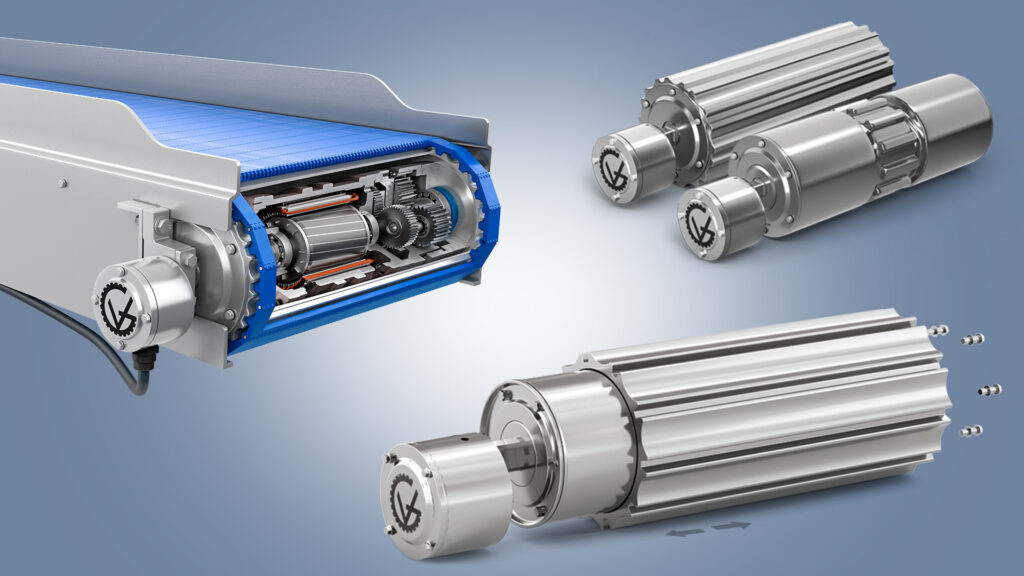
Traditional belt conveyors in food processing plants face hygiene challenges primarily associated with the conveyor belt drive. The most common belt conveyors in these plants use modular belts driven by sprockets mounted on a square shaft, which is connected to an external motor/gearbox drive.
Food debris can fall, become trapped and accumulate between the sprockets, making it especially difficult to remove during the pressure washing process, particularly from the square bore where the sprockets are mounted. This creates an ideal breeding ground for bacteria. Additionally, in most cases, traditional external conveyor drives use a fan-cooled motor. The fan draws in air, along with microbes from the surrounding environment, to cool the motor. As a result, bacteria from the air can be transferred to the conveyor belt and onto the processed products.
“Why is hygiene particularly critical in dairy processing?”
Maintaining high hygienic standards is crucial in dairy processing since the food product can be removed from the belt conveyor and consumed without further preparation, unlike other processed food products that must be cooked before consumption.